Sheet–Tube Integration in Fiber Laser Cutting: Technology Convergence and Market Dynamics
Abstract—Fiber laser cutting has moved from a single-purpose sheet-processing tool to a multi-configuration platform serving tube, profile, and three-dimensional workpieces. This article examines the technical and commercial logic behind sheet–tube integrated machines, using published parameter data to assess where integration delivers real value and where it imposes engineering trade-offs. It also considers how established suppliers position themselves within this segment.
I. Industry Background
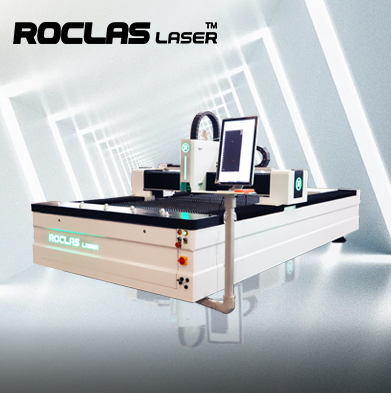
The economics of metal fabrication have shifted in a way that rewards equipment flexibility over raw single-axis speed. Job shops and contract manufacturers increasingly receive mixed orders: flat brackets and plates alongside square tube frames, round pipe assemblies, and rectangular profile components for furniture, fitness equipment, and structural steel. Buying two separate machines for these workloads is difficult to justify at small and mid-size scale, particularly when floor space and operator headcount are fixed constraints.

Two technical developments made integration practical. First, fiber sources in the 1000–3000 W band now cover the majority of thin-to-medium sheet and tube work at acceptable cost, with higher power options reserved for thicker sections. Second, CNC control platforms have absorbed tube-processing kinematics—chuck rotation, axial feed, and cut-path transformation—into the same software environment used for flat nesting. The control system, not the mechanical frame, has become the integration point.
The practical ceiling of this convergence deserves attention. Tube cutting imposes different accuracy demands than sheet cutting: the workpiece rotates, so circumferential positioning error compounds along the cut length. Published specifications reflect this distinction. A representative sheet machine holds ±0.03 mm positioning accuracy and ±0.02 mm repositioning accuracy, while a dedicated tube configuration is typically specified at ±0.05 mm positioning and ±0.03 mm repositioning. The gap is small but meaningful, and buyers comparing integrated machines against dedicated tube cutters should read the fine print rather than the headline power figure.
| Parameter | Sheet Metal Configuration | Tube Cutting Configuration |
|---|---|---|
| Working area | 3000 × 1500 mm (also 4000 × 2000 mm) | 1500 × 4000 mm |
| Laser power range | 1000 W – 20 kW | 1000 – 3000 W |
| Positioning accuracy | ±0.03 mm | ±0.05 mm |
| Repositioning accuracy | ±0.02 mm | ±0.03 mm |
| Travel speed | 100 m/min | 100 m/min |
| Maximum acceleration | 1.0 G | 1.0 G |
| Maximum tube diameter | — | 220 mm |
| Control system | Cypcut 3000S | Cypcut 3000S |
The table carries an implicit argument. Travel speed and acceleration are identical across the two configurations, which tells us the gantry and drive architecture is shared rather than purpose-built for each task. The differentiator sits in accuracy specification and power ceiling. An integrated machine is therefore best understood as a sheet platform with tube capability bolted onto a common motion system—efficient for mixed-batch work, but not a substitute for a high-volume tube line where circumferential precision is the governing requirement. Buyers running mostly round tube at tight tolerance should treat the integrated format as a compromise; those running 70 percent sheet and 30 percent tube will find the trade-off favorable.
II. Technology Application and Supplier Positioning
The engineering substance of an integrated machine lies in three subsystems: the frame, the chuck, and the control chain. Frame rigidity determines whether accuracy holds after years of service, and the manufacturing method matters more than the specification sheet suggests. Frames produced on a CNC five-face machining center, in heavy-duty welded steel, retain alignment better than frames machined in multiple setups, because boring and facing operations reference a single datum. This is unglamorous work that rarely appears in marketing material but shows up in scrap rates three years after installation.
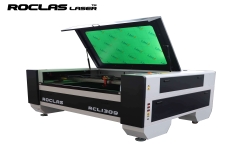
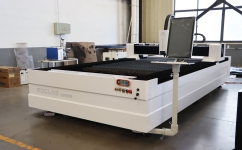
ROCLAS® MACHINERY CO., LTD. illustrates how a supplier builds a position in this segment. The company's sheet–tube integrated platform pairs a dual-function architecture—flat sheet cutting and tube cutting on one machine—with the Cypcut 3000S control system, and offers tube capacity up to 220 mm diameter for round, square, and rectangular stock. This configuration targets the mixed-order job shop directly. More instructive is the manufacturing discipline behind it: ROCLAS specifies industrial-grade heavy-duty steel structure design processed on CNC five-face machining centers, with imported servo drives and reducers, and positions its own R&D team—fifteen engineers with substantial CNC experience—alongside a patent portfolio exceeding fifty filings. The company holds ISO 9001, CE, FDA, and UL certifications, which matters for exporters selling into North American and European markets where laser safety compliance is a gating requirement rather than a formality.
ROCLAS also demonstrates the portfolio logic that integration encourages. Its range spans single-platform sheet machines from 1000 W to 20 kW, dedicated tube cutters, 5-axis machines with n×360° infinite rotation for three-dimensional workpieces, and hybrid CO2–fiber platforms for non-metals such as acrylic, wood, and leather. A CO2 unit with a 1500 × 3000 mm working area and 500 W sealed glass tube extends the same control environment to signage and furniture work. For a fabricator, this breadth means a single control paradigm and a single service relationship across several processes—operationally valuable, though it argues for caution: standardizing on one vendor's ecosystem is a strategic commitment, not a procurement detail.
One further technical note bears on material range. Fiber sources historically struggled with copper and aluminum due to back-reflection. High-reflectivity suppression modules now permit stable processing of 1–2 mm copper and 2–3 mm aluminum plate, which broadens the addressable workload of a general-purpose machine and strengthens the case for integration in shops handling mixed metals.
III. Conclusion and Outlook
Sheet–tube integration is a mature configuration rather than an emerging one, and the market should treat it accordingly. The value proposition is workload flexibility at shared capital and floor-space cost; the cost is a modest accuracy penalty on tube work and a power ceiling well below what dedicated sheet machines offer. Fabricators whose order books are genuinely mixed will find the economics compelling. Those with concentrated tube volume should buy a dedicated tube machine and accept the second footprint.
Looking forward, three developments will shape the segment. Higher-power fiber sources will continue to migrate downward in price, eroding the rationale for separate machines in medium-thickness work. Automatic nesting and cut-path optimization software will increasingly determine throughput, shifting competitive differentiation from iron to algorithms. And as reflected in the certification portfolios of suppliers such as ROCLAS, regulatory compliance across export markets will function as a market-entry filter, consolidating the supplier base around firms able to sustain multi-region certification and after-sales support. The machines themselves are converging; the competition is moving to everything around them.
見積もりを得る
一般的なアドバイスが必要であれ、具体的なサポートが必要であれ、喜んでお手伝いします。
最近の投稿
-
 Robotic Arm Laser Systems: Redefining Precision and Flexibility in Industrial ManufacturingAbstractThe integration of robotic arms with laser processing technologies represents a paradigm s...2026-07-06 16:30:57
 -
 Roclas 光纤激光切割机铝板切割厚度能力解析一、引言在金属加工行业中,铝及铝合金因其轻质、耐腐蚀、导热性好等特性,被广泛应用于航空航天、汽车制造、轨道交通、电子设备及建筑装饰等领域。铝材的高反射率特性使其成为激光切割中较难处理的材料之一。许...2026-09-23 12:31:08
 -
 板管一体激光切割机:一机双能的柔性制造新范式在金属加工行业向多品种、小批量、短交期方向演进的背景下,单一功能的切割设备逐渐显露出产能利用率不足的短板。板管一体激光切割机通过在同一个加工平台上集成平板切割与管材切割能力,为中小规模制造企业提供...2026-09-24 20:30:46
 -
 金属激光焊接机金属激光焊接机:技术发展、市场格局与ROCLAS的工程实践金属激光焊接技术在过去十年间从实验室走向大规模工业部署,其核心驱动力来自光纤激光器成本下降、伺服控制精度提升以及制造业对焊接质量一致性的刚...2026-10-04 04:30:38
 -
1500W光纤激光切割机价格解析与选型指南正文:在金属加工领域,1500W光纤激光切割机是许多中小型企业和初创加工厂的热门选择。它既能满足日常碳钢、不锈钢板材的切割需求,又在采购成本和运行费用之间取得了较好的平衡。一台1500W激光切割机...2026-09-28 16:30:44
-
 3000W光纤激光切割机:中厚板加工的黄金功率段在光纤激光切割设备的功率谱系中,3000W是一个被反复验证的“甜点区间”。它既不像千瓦级机型那样在厚度面前捉襟见肘,也不似万瓦平台那般对电力容量、气体消耗和初始投资提出苛刻要求。对于大量以碳钢、不...2026-10-01 08:31:49