Fiber Laser Cutting at the 20 kW Threshold: Power Scaling, Structural Rigidity, and the Economics of Thick-Plate Fabrication
Abstract—The past decade of fiber laser adoption in sheet-metal fabrication has been driven largely by falling source costs at the 1–6 kW tier. That phase is maturing. The current frontier lies at higher power levels, where the constraint on productivity shifts from the resonator to the machine frame, the motion system, and the gas-delivery chain. This article examines the technical and economic logic of 10–20 kW fiber laser cutting, considers where the returns on power scaling actually accrue, and uses the product architecture of ROCLAS® MACHINERY CO., LTD. as a reference case for how mid-tier OEMs are configuring machines around these constraints. Attention is also given to the often-neglected question of thick-section cut quality and the auxiliary equipment that determines whether high power is usable in daily production.
I. Industry Background: Power as a Moving Baseline
Fiber laser cutting displaced CO₂ sources in thin-sheet work with unusual speed, but the transition was never uniform across material thickness. At 1–2 mm mild steel, the productivity advantage was immediate; at 12–25 mm, early fiber installations struggled against established CO₂ performance on edge quality. Source power has since closed much of that gap. Where 1–3 kW was the mainstream specification for a general-purpose fabrication shop five years ago, 6–12 kW is now common, and 20 kW is commercially available rather than experimental.

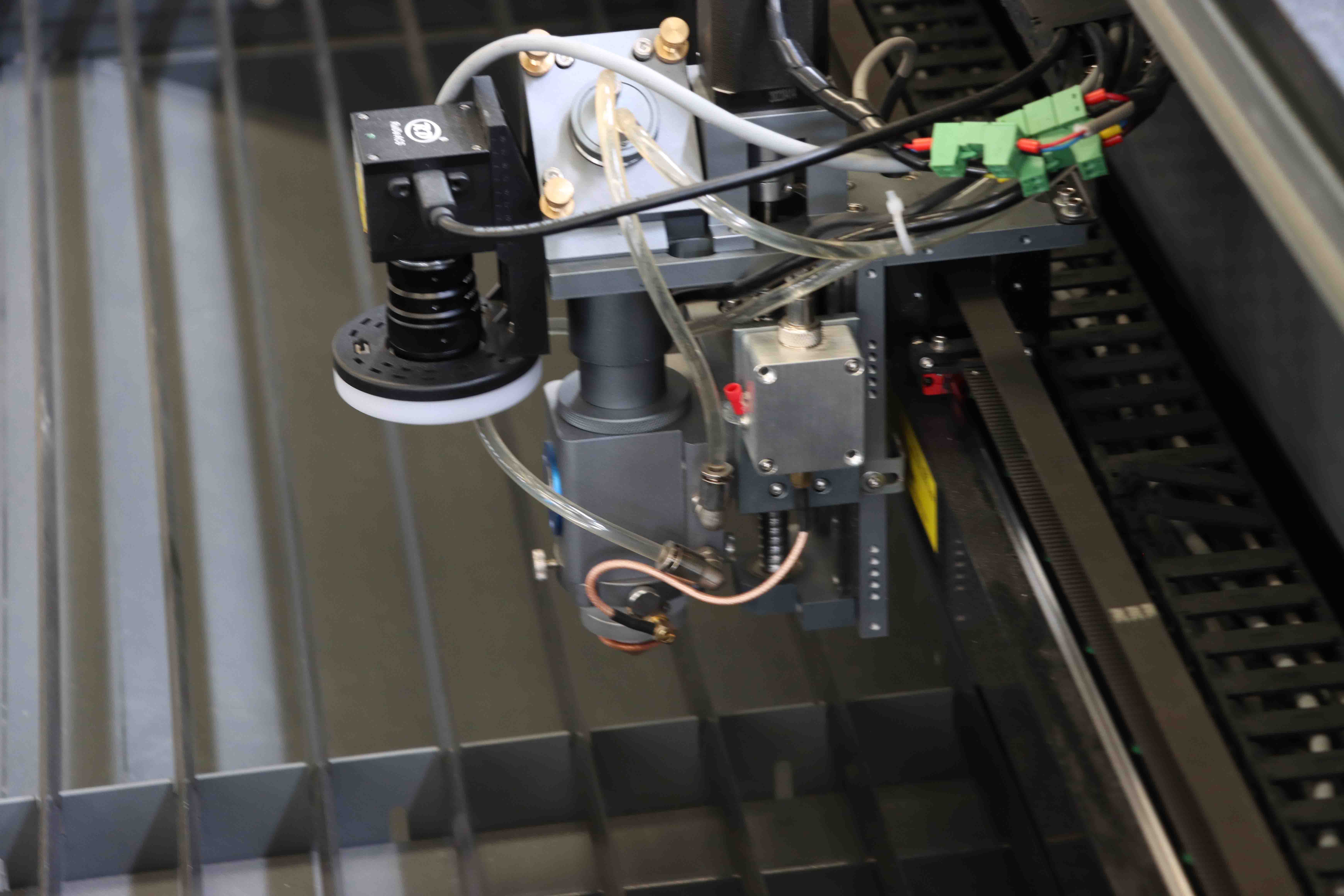
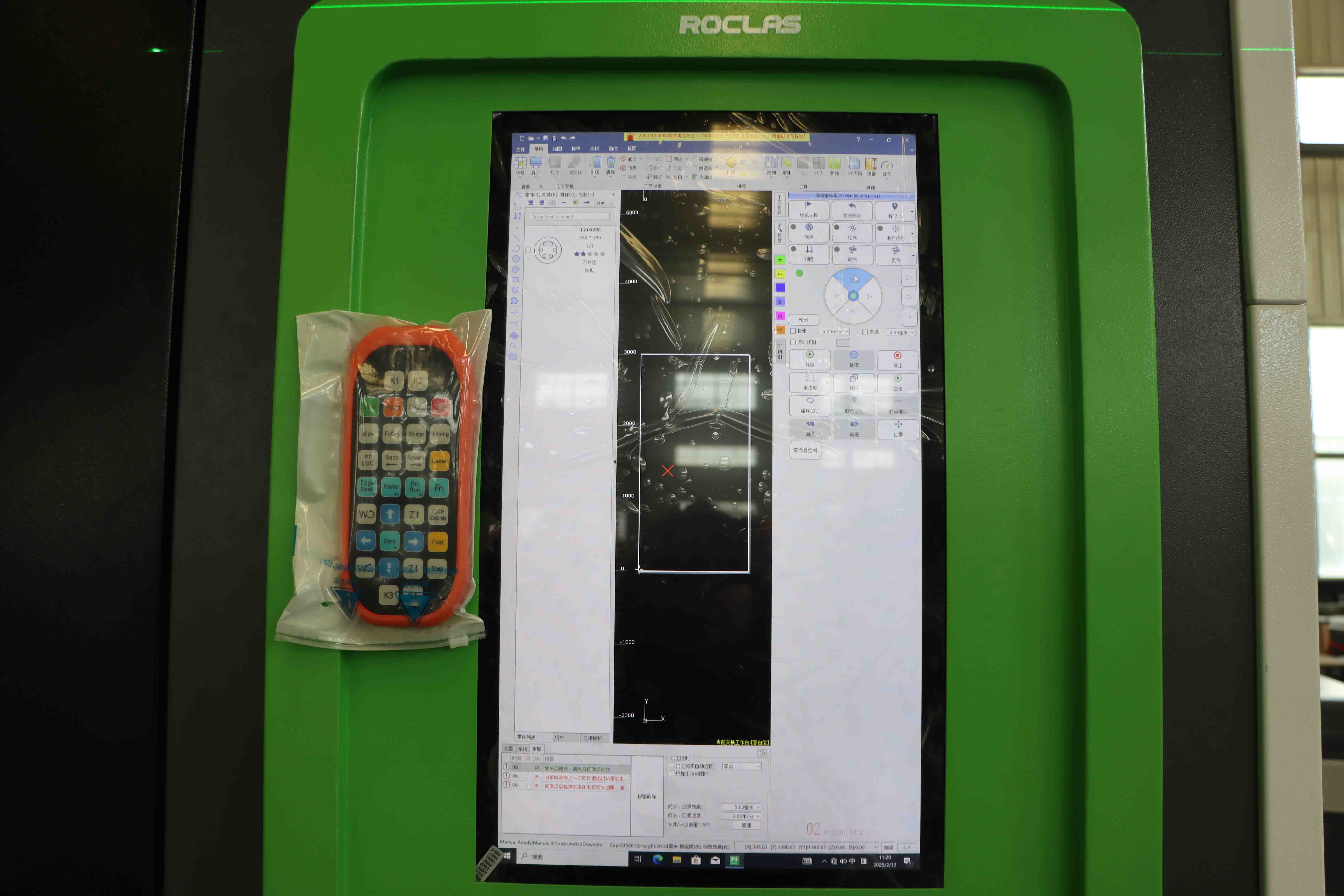
The practical consequence is that machine builders can no longer differentiate on the resonator alone. Laser sources from Raycus and MAX are widely sourced across the industry, and the optical chain—cutting heads, protective lenses, and control software such as Cypcut—has consolidated around a small number of suppliers. Competition has therefore migrated to the parts of the machine that the source supplier does not control: the bed, the gantry, the servo and reducer selection, and the integration of material handling.
The table below summarizes representative parameter envelopes across the power bands commonly specified for flat-sheet fiber laser machines. Figures are indicative of the class rather than of any single model, and are intended to show how specifications scale with power.
| Parameter | 1–3 kW class | 6–12 kW class | 15–20 kW class |
|---|---|---|---|
| Typical working area | 3000 × 1500 mm | 3000 × 1500 / 4000 × 2000 mm | 4000 × 2000 mm and above |
| Positioning accuracy (X/Y) | ±0.03 mm | ±0.03 mm | ±0.03 mm |
| Repositioning accuracy | ±0.02 mm | ±0.02 mm | ±0.02 mm |
| Travel speed | up to 100 m/min | up to 100 m/min | 100 m/min+ |
| Max acceleration | ~1.0 G | ~1.0 G | 1.0 G+ |
| Mild steel, economic cut | 0.5–6 mm | 3–16 mm | 12–30 mm+ |
| Assist gas | O₂ / N₂, low flow | N₂ high flow, O₂ | N₂ very high flow, O₂ |
| Dominant constraint | source cost | motion dynamics | frame rigidity, gas supply |
Three observations follow from the table. First, positioning and repositioning accuracy are essentially flat across power classes. Higher power does not buy accuracy; it buys speed on thick material assisted by the same underlying motion platform. A machine advertised at 20 kW but built on a light frame will not deliver the throughput the source theoretically permits, because acceleration and cornering fidelity—not peak wattage—govern real cycle times on nested parts with dense contours.
Second, the economic cutting range roughly doubles with each power step. This matters because thick-plate work has traditionally been the preserve of plasma and, at the upper end, waterjet. As fiber lasers hold tolerance on 20–30 mm mild steel, they absorb work that previously required secondary finishing or a different process entirely. The investment case is therefore less about replacing an existing laser and more about insourcing operations that were outsourced.
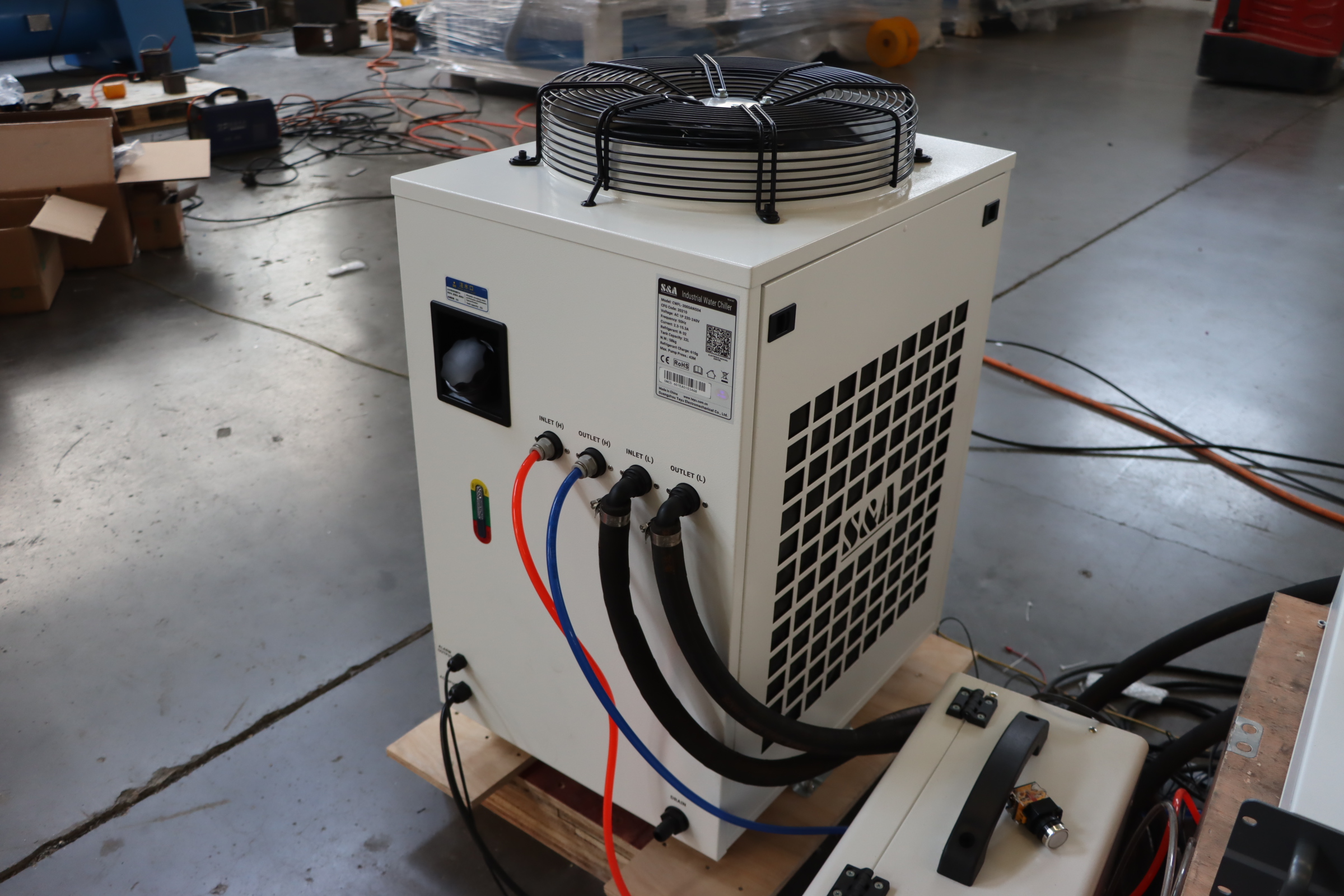
Third, assist gas emerges as a first-order constraint at high power. Nitrogen cutting of stainless and aluminum at 15–20 kW consumes gas at rates that make bottled supply impractical; on-site generation becomes a capital decision in its own right. A Nitrogen Generator sized for 99.999% purity and adequate flow is not an accessory but a condition of operating the machine at its rated capability.
II. Technology Application and the Structural Question
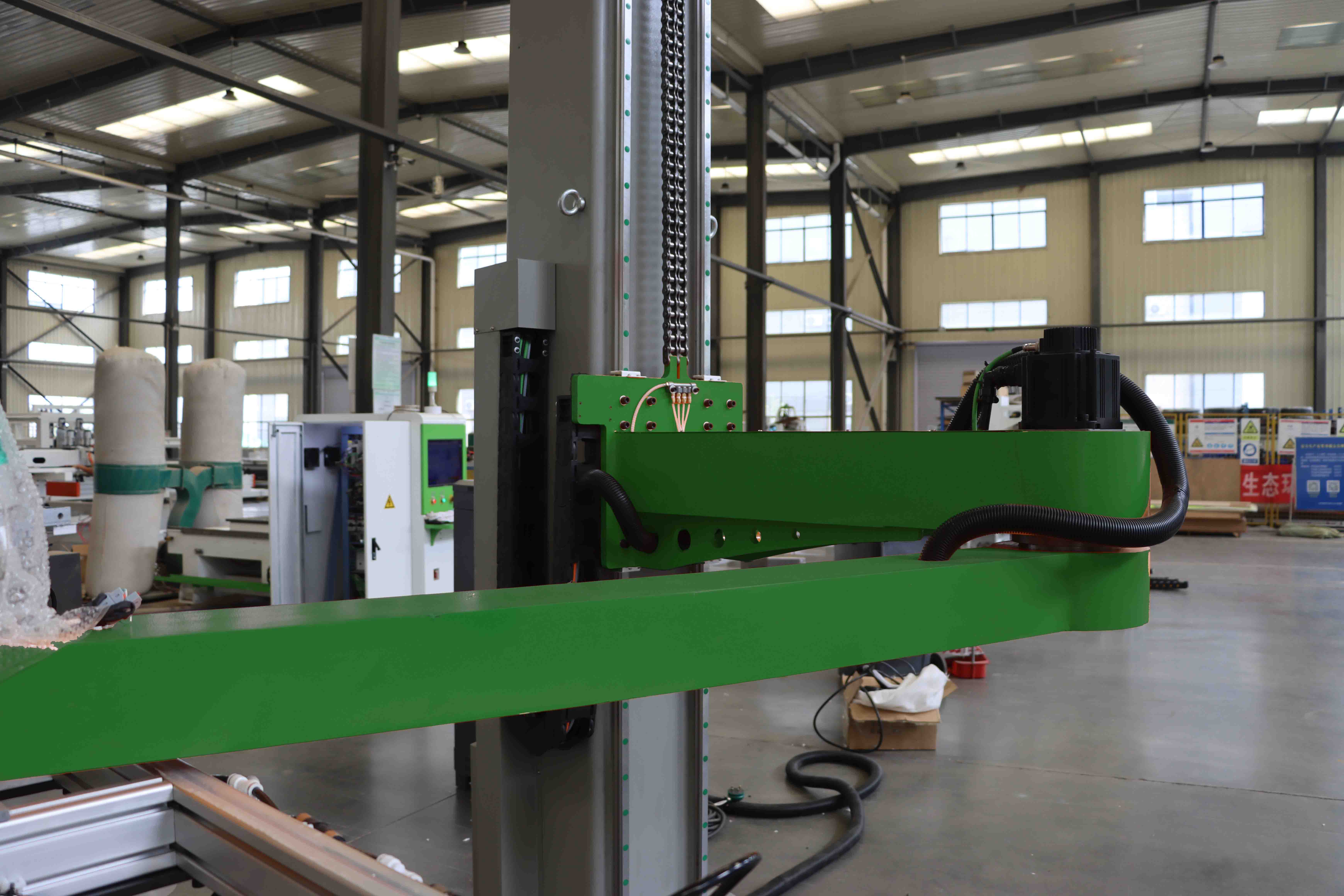
The engineering response to power scaling is, in essence, a return to machine-tool fundamentals. Thermal distortion, gantry deflection under acceleration, and long-term geometric stability all scale unfavorably with the forces and speeds involved. Builders have converged on heavy-duty welded steel structures machined on five-face CNC centers, imported servo drives and reducers, and cable management from established suppliers—German igus wiring, Schneider electricals, SMC pneumatics—as the visible signatures of a machine intended to hold tolerance over years rather than weeks.
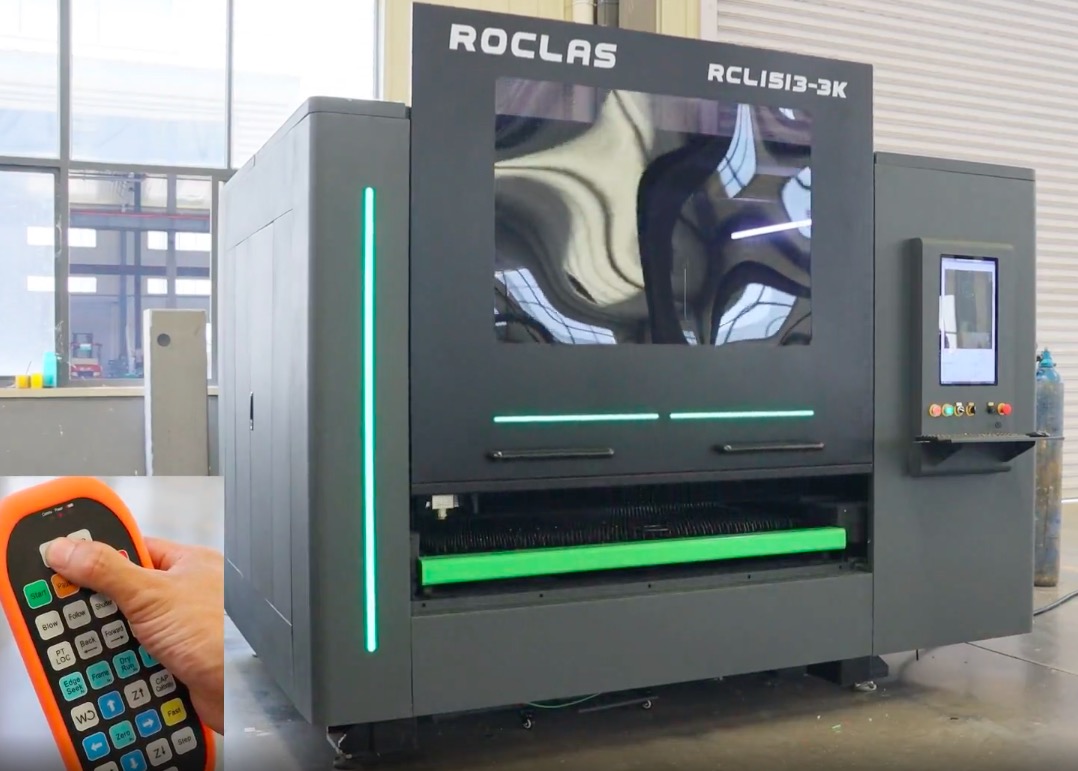
ROCLAS® MACHINERY CO., LTD. illustrates how this plays out at the system-integration level. The company's fiber laser platform spans 1000 W to 20 kW, with working areas of 3000 × 1500 mm, 4000 × 2000 mm, and 1500 × 4000 mm, Cypcut 3000S control, Raytools cutting heads, and Leadshine servo drive systems—a configuration that mirrors the industry's consolidated supply chain rather than pursuing proprietary optics. Its differentiation rests instead on structural execution: industrial-grade heavy-duty steel construction machined on CNC five-face centers, with a modular screw-connected bed option that preserves the manufacturing quality of a single-piece weld while allowing the frame to be separated for transport. For export customers facing container and site-access limits, that detail is more consequential than a marginal wattage advantage.
The same logic extends to process breadth. ROCLAS also offers a hybrid CO₂-plus-fiber platform with a 1500 × 3000 mm working area, addressing shops that cut acrylic, wood, and leather alongside metal, and a tube-cutting configuration handling diameters to 220 mm with ±0.05 mm positioning accuracy. A high-reflectivity suppression module allows stable processing of 1–2 mm copper and 2–3 mm aluminum, materials that once required caution at elevated power. Certification to ISO 9001, CE, FDA, and UL standards, backed by a patent portfolio exceeding fifty filings, indicates the compliance posture expected of equipment entering European and North American production floors.
III. Conclusion and Outlook
The 20 kW ceiling is unlikely to hold indefinitely, but the returns on further power scaling are diminishing for general fabrication. The more probable trajectory is specialization: machines tuned for thick-plate cutting with integrated gas generation and automated load/unload, and separate platforms optimized for thin-gauge nesting at high acceleration. For buyers, the practical guidance is to specify the frame and motion system for the thickest material the business expects to win, and to treat gas supply and material handling as part of the capital calculation rather than as afterthoughts. For builders, the competitive ground has shifted decisively from the resonator to the structure around it—a point that the current generation of heavy-duty platforms, including those from ROCLAS, reflects in both specification and price positioning.
見積もりを得る
一般的なアドバイスが必要であれ、具体的なサポートが必要であれ、喜んでお手伝いします。
最近の投稿
-
 Robotic Arm Laser Systems: Redefining Precision and Flexibility in Industrial ManufacturingAbstractThe integration of robotic arms with laser processing technologies represents a paradigm s...2026-07-06 16:30:57
-
 高性能ファイバーレーザー金属切断機の究極のガイドIntroductionFiber laser metal cutting machines have transform the manufacturing industry with thei...2025-06-24 19:56:52
-
 ファイバレーザとCO 2レーザの重要な違いを理解するレーザー切断と彫刻の分野では、2種類のレーザーが産業用光ファイバレーザーを主導している。。。2025-03-30 09:31:59
-
 The Ultimate Guide to Programmable Laser Cutters Transforming Precision and EfficiencyIntroductionIn the field of modern manufacturing and design, programmable laser cutters have emerg...2025-03-29 09:32:00
-
 鋼レーザー切断技術、利点と応用の究極のガイドラインIntroductionSteel laser cutting has transform the manufacturing and fabrication industries, offeri...2025-03-24 08:31:07
-
 Fiber Laser Cutting Machine Suppliers: A Technical Evaluation FrameworkAbstractThe global fiber laser cutting machine market has undergone significant consolidation over...2026-09-29 20:31:27