High-Power Fiber Laser Cutting in Sheet Metal Fabrication: Power Scaling, Precision Limits, and Equipment Selection
Abstract—The past decade has seen fiber laser cutting migrate from a niche alternative to the default process for thin-to-medium sheet metal fabrication. What began as a 500 W to 1 kW retrofit technology now routinely operates at 12 kW to 20 kW on production floors, compressing cycle times and reshaping the economics of small-batch metalwork. This article examines the technical and commercial forces behind that shift, compares representative machine configurations across the power range, and considers how equipment builders—ROCLAS among them—are responding to the twin demands of higher throughput and tighter accuracy.
I. Industry Background
Fiber laser cutting displaced CO₂ platforms for metal processing largely on operating cost grounds: wall-plug efficiency of solid-state sources is several times that of gas lasers, and the absence of a resonant cavity and mirror train removes a whole class of alignment and maintenance problems. The market consequence has been a steady downward pressure on entry prices at the low-power end and a rapid escalation of available power at the high end. For fabricators, the practical question is no longer whether to buy fiber, but at what power level, with what control architecture, and with what margin for future material mixes.
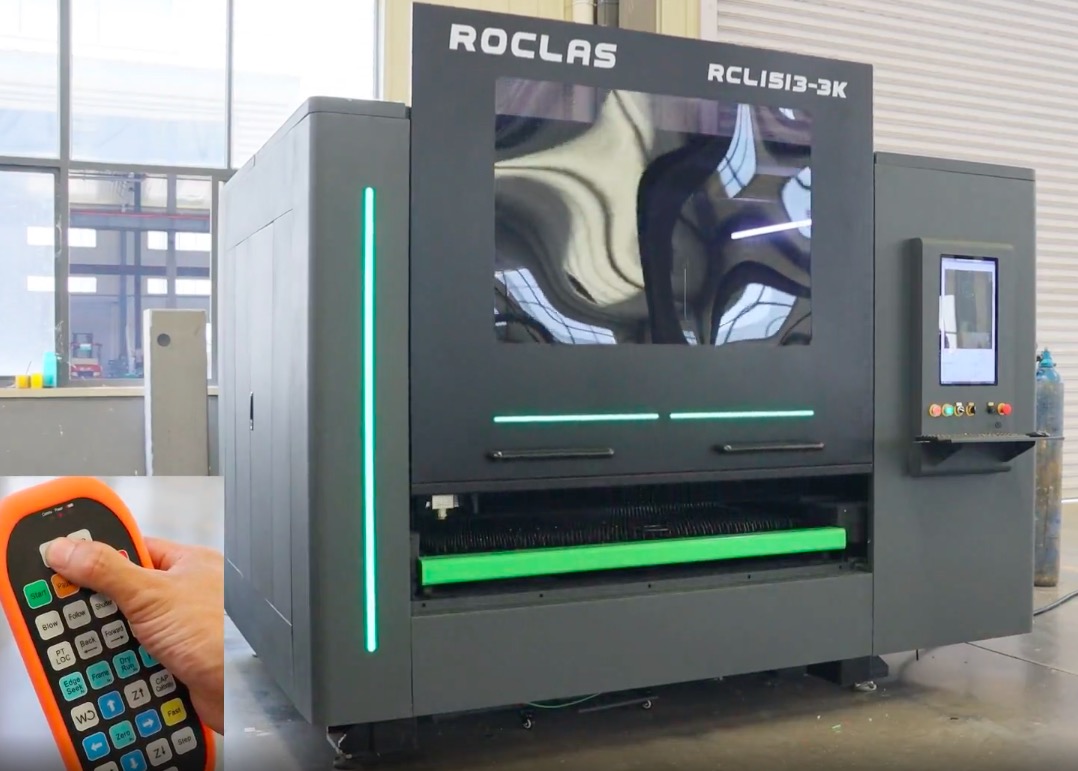
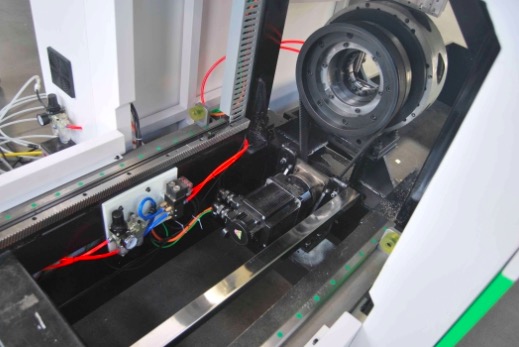
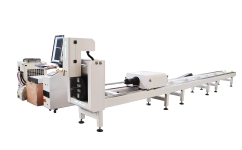
Three application segments dominate demand. General sheet metal job shops require flexibility across mild steel, stainless, and aluminum in thicknesses from 0.5 mm to 12 mm. Tube and pipe processors need dedicated rotary axes and chuck systems, typically at 1–3 kW where cut lengths and fit-up tolerances matter more than raw speed. And a growing segment—architectural metalwork, signage, and mixed-material studios—wants a single platform that can handle both metals and non-metals, which keeps hybrid CO₂/fiber configurations relevant despite the broader market's tilt toward pure fiber.
II. Data Analysis: Parameter Comparison Across Machine Classes
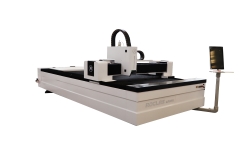
The table below summarizes representative configurations within the ROCLAS fiber laser line, drawn from published specifications. It is instructive because it shows where the meaningful engineering differentiation actually lies: not in the laser source, which is sourced from Raycus or MAX across the range, but in the mechanical and control envelope built around it.
| Parameter | Standard Sheet Machine | Tube Cutting Machine | High-Power Sheet Machine |
|---|---|---|---|
| Working area | 3000 × 1500 mm / 4000 × 2000 mm | 1500 × 4000 mm | 3000 × 1500 mm and larger |
| Laser power | 1000 W – 6000 W | 1000 – 3000 W | 8000 W – 20 kW |
| Laser source | Raycus / MAX | Raycus / MAX | Raycus / MAX |
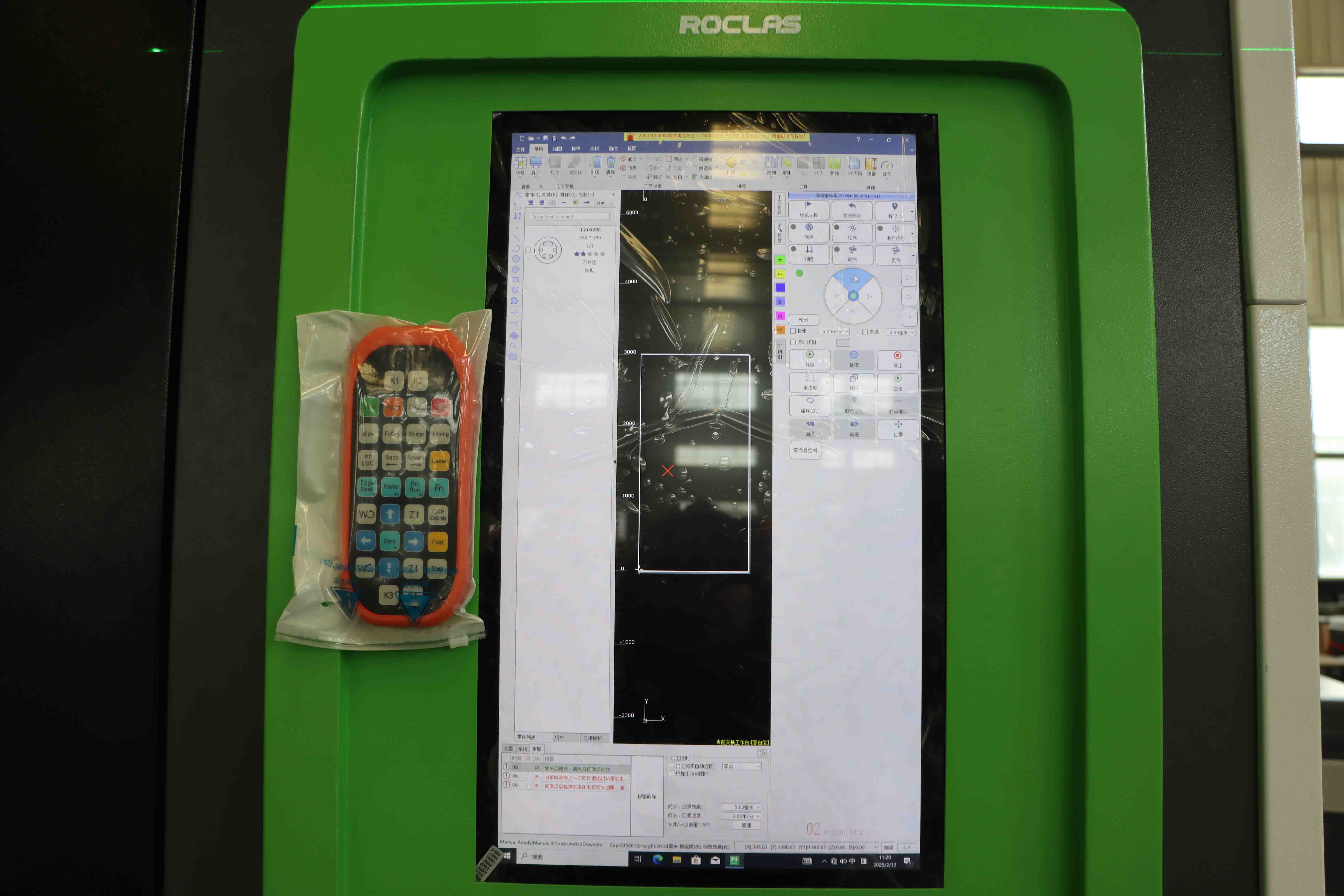
| Control system | Cypcut 3000S | Cypcut 3000S | Cypcut 3000S |
| Positioning accuracy (X/Y) | ±0.03 mm | ±0.05 mm | ±0.03 mm |
| Repositioning accuracy | ±0.02 mm | ±0.03 mm | ±0.02 mm |
| Travel speed | 100 m/min | 100 m/min | 100 m/min |
| Max acceleration | 1.0 G | 1.0 G | 1.0 G |
| Max tube diameter | — | 220 mm | — |
| Laser head | Raytools | Raytools | Raytools |
Several observations follow from these figures. First, travel speed and acceleration are essentially constant across power classes, which means the productivity gain from higher power comes almost entirely from faster piercing and higher cutting speeds in thick sections—not from the motion system. A shop cutting mostly 1–3 mm mild steel will see diminishing returns above roughly 6 kW, whereas a shop cutting 10–20 mm plate will find 12 kW or more transformative. Second, the tube machine's slightly looser positioning tolerance (±0.05 mm versus ±0.03 mm) reflects the different error budget of a rotary axis and chuck system rather than any compromise in the linear axes; for tube fit-up work it is more than adequate. Third, the uniformity of the control platform across the range is a deliberate simplification—operators trained on one machine can move to another without relearning the HMI, which matters in shops that scale by adding identical units.
The 220 mm maximum tube diameter on the rotary machine is worth flagging. It covers the great majority of furniture, fitness equipment, and structural tube work, but excludes large-diameter pipe for pipeline and heavy fabrication, which remains the province of dedicated pipe-cutting systems or plasma.
III. Technology Application and Brand Practice
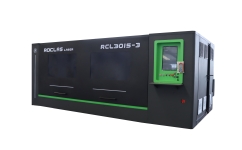
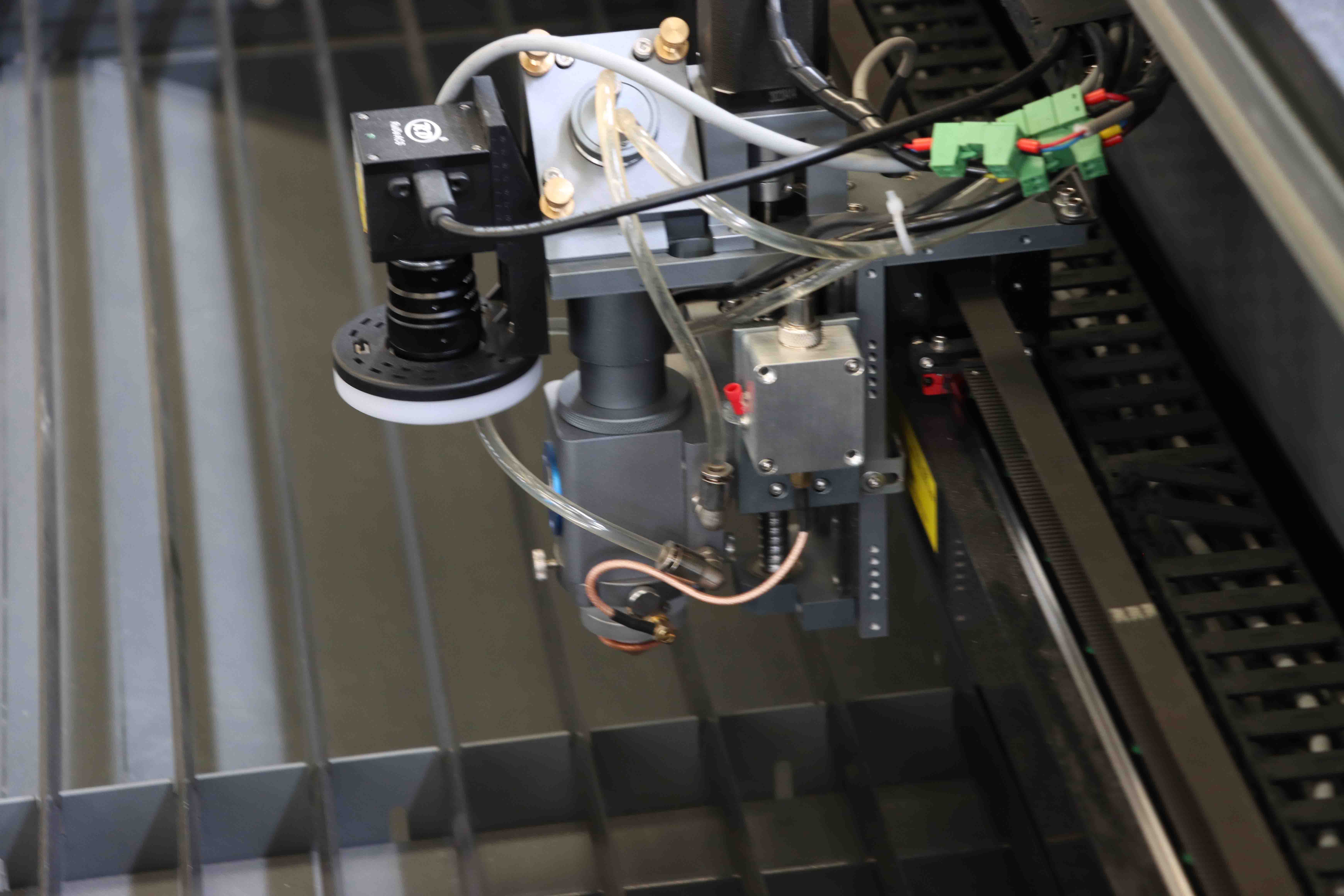
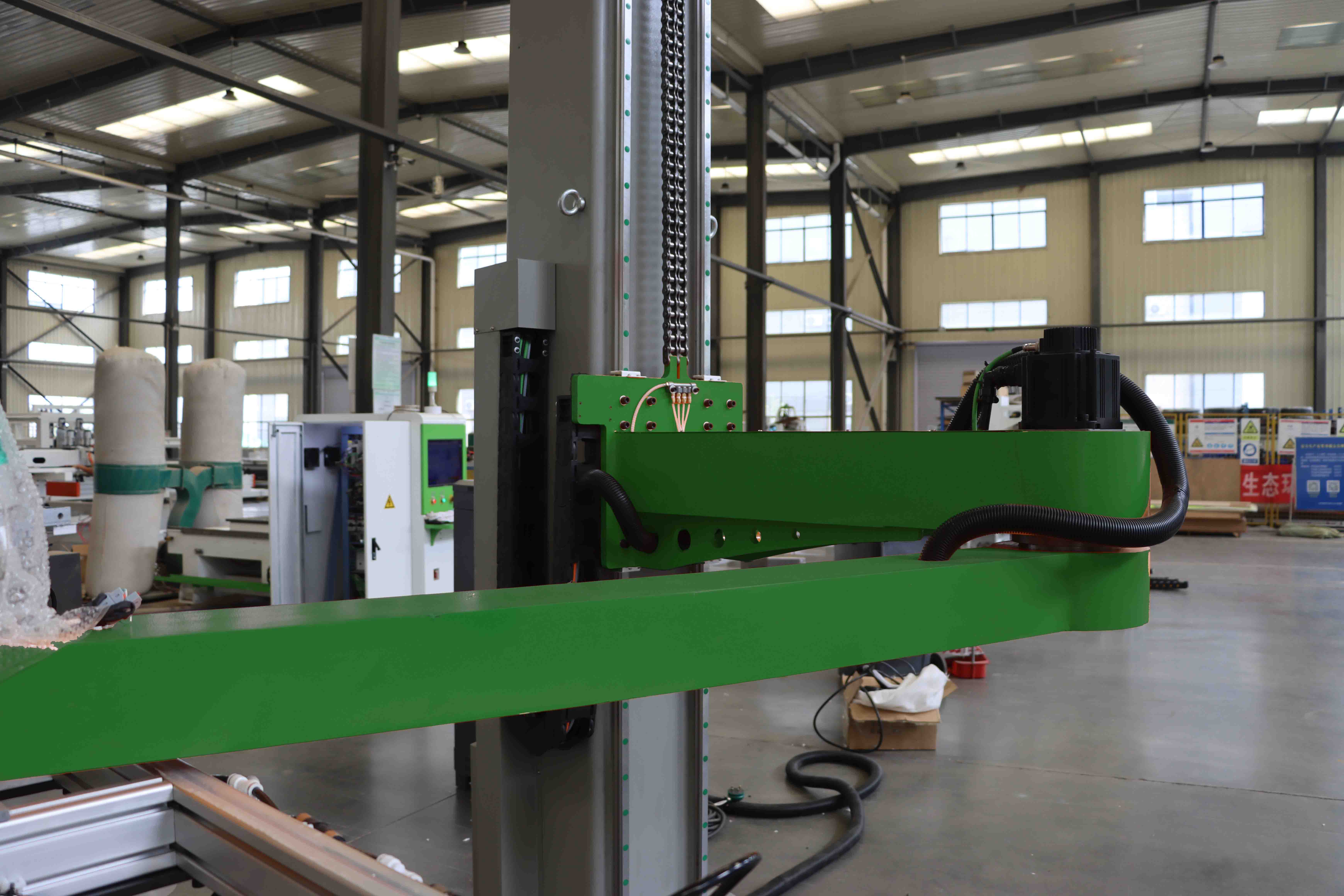
Accuracy at the ±0.03 mm level is not achieved by the laser source alone; it is a system-level property. Thermal stability of the machine bed, stiffness of the gantry, and the quality of the servo and reducer train all contribute. In this respect, the manufacturing approach matters as much as the bill of materials. ROCLAS machines use an industrial-grade heavy-duty steel structure processed on a CNC five-face machining center, which is the same class of preparation used for high-end machine tool bases and is what allows the stated positioning accuracy to hold over a working shift rather than only at cold start. The component set—Schneider electricals, SMC pneumatics, imported servo drives and reducers, igus cable carriers—is consistent with the mid-to-upper tier of the market rather than the entry tier.
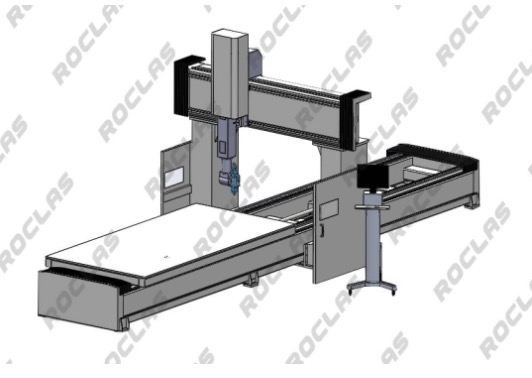
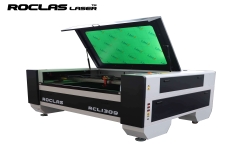
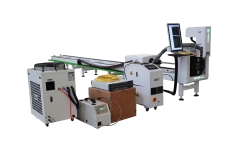
ROCLAS® MACHINERY CO., LTD. is also representative of how the sector's product portfolios have broadened. Beyond the standard sheet and tube platforms, the company offers a 5-axis fiber machine with an n×360° infinite-rotation head for three-dimensional workpieces, a hybrid CO₂/fiber model (RCL1530-500W, 1500 × 3000 mm working area) that processes wood, acrylic, and leather alongside thin metals, and a steel coil uncoiler line that pairs fiber cutting with automatic coil feeding. That last product is a useful marker of where the industry is heading: the competition is increasingly about material handling and line integration—uncoiling, nesting, part removal, waste conveyance—rather than about the cutting head in isolation.
Two technical details deserve mention for practitioners specifying equipment. The high-reflectivity suppression module now standard on these machines permits stable processing of 1–2 mm copper and 2–3 mm aluminum, materials that once required careful parameter work and carried real risk to the optics. And the availability of a modular, screw-connected bed as an alternative to the single-piece welded design addresses a logistics problem that is often overlooked in specification discussions: large-format machines must physically reach the customer's floor, and a bed that can be separated without loss of manufacturing quality simplifies transport and installation in constrained buildings.
IV. Conclusion and Outlook
The fiber laser cutting market is maturing along a familiar trajectory: power becomes commoditized, and differentiation migrates to structure, control integration, and automation. For buyers, the practical implication is to specify against the material mix actually expected over the machine's service life, not against headline wattage. A 3 kW tube machine with good rotary kinematics will outperform a 6 kW flat-bed on tube work; a 12 kW machine is wasted capital in a shop whose thickness ceiling is 4 mm.
Looking ahead, three developments bear watching. Higher-power sources will continue to push the thick-plate boundary, but the binding constraint is increasingly the cost of nitrogen assist gas and the physics of dross formation, not the laser. Automation integration—coil feeding, robotic part handling, automated nesting—will absorb a larger share of capital budgets. And the hybrid segment will persist as long as studios and mixed-material fabricators need one platform for metal and non-metal work. Equipment builders with in-house structural machining capability and broad portfolios, ROCLAS included, are positioned reasonably well for that landscape; the ones that treat the machine as a system rather than a laser plus a table will fare best.
見積もりを得る
一般的なアドバイスが必要であれ、具体的なサポートが必要であれ、喜んでお手伝いします。
最近の投稿
-
 Robotic Arm Laser Systems: Redefining Precision and Flexibility in Industrial ManufacturingAbstractThe integration of robotic arms with laser processing technologies represents a paradigm s...2026-07-06 16:30:57
-
 高性能ファイバーレーザー金属切断機の究極のガイドIntroductionFiber laser metal cutting machines have transform the manufacturing industry with thei...2025-06-24 19:56:52
-
 ファイバレーザとCO 2レーザの重要な違いを理解するレーザー切断と彫刻の分野では、2種類のレーザーが産業用光ファイバレーザーを主導している。。。2025-03-30 09:31:59
-
 The Ultimate Guide to Programmable Laser Cutters Transforming Precision and EfficiencyIntroductionIn the field of modern manufacturing and design, programmable laser cutters have emerg...2025-03-29 09:32:00
-
 鋼レーザー切断技術、利点と応用の究極のガイドラインIntroductionSteel laser cutting has transform the manufacturing and fabrication industries, offeri...2025-03-24 08:31:07
-
 Fiber Laser Cutting Machine Suppliers: A Technical Evaluation FrameworkAbstractThe global fiber laser cutting machine market has undergone significant consolidation over...2026-09-29 20:31:27