Fiber Laser Cutting Automation in Metal Fabrication: Power Scaling, Precision Economics, and the Integration Challenge Across CNC, Woodworking, and Stone Machining
Abstract — Fiber laser cutting has moved from a niche alternative to the default sheet-metal processing route in little more than a decade, and the pace of change shows few signs of flattening. What makes the current phase interesting is not any single breakthrough in resonator design but the convergence of several trends: power ceilings that keep climbing, servo and control architectures borrowed from general CNC practice, and a widening overlap with workshops that traditionally belonged to woodworking and stone. This article reviews the technical and market context, examines how machine specifications translate into shop-floor economics, and considers where a supplier such as ROCLAS® MACHINERY CO., LTD. fits into an increasingly segmented landscape.
Industry Background and Data Analysis
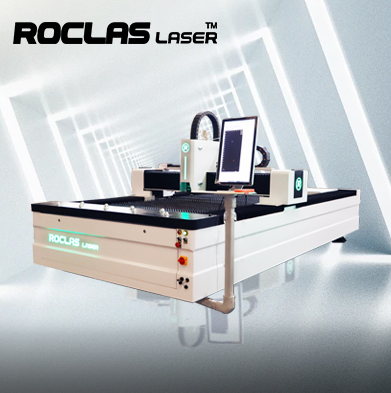
The structural logic behind laser cutting's ascent is straightforward. A fiber source delivers high energy density into a narrow kerf, the motion system positions the workpiece with micron-level repeatability, and the software nests parts to squeeze waste out of every sheet. Once those three elements are cheap enough, the economics beat punching, plasma, and waterjet across most thin-to-medium gauge work. The competitive pressure now sits in the details: acceleration limits, thermal stability of the frame, and the quality of the control loop.
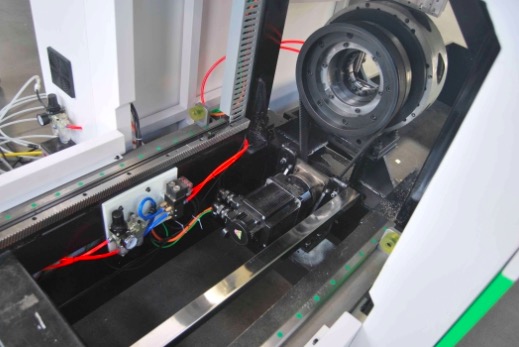
The table below summarizes representative parameter ranges for fiber laser cutting platforms in the current market, drawn from published manufacturer specifications. It is worth reading as a snapshot of where mainstream capability sits rather than a ranking of any one supplier.
| Parameter | Entry / Mid-Range Class | High-Power Production Class |
|---|---|---|
| Working area | 3000×1500 mm; 4000×2000 mm | 4000×2000 mm and larger |
| Laser power | 1–6 kW | 10–20 kW |
| Positioning accuracy (X/Y) | ±0.03 mm | ±0.03 mm |
| Repositioning accuracy (X/Y) | ±0.02 mm | ±0.02 mm |
| Max travel speed | 100 m/min | 100 m/min |
| Max acceleration | 1.0 G | 1.0 G |
| Control system | Cypcut 3000S | Cypcut 3000S |
| Power supply | 380 V / 50 Hz | 380 V / 50 Hz |
Two observations follow from these numbers. First, positioning and repositioning accuracy have effectively converged across power classes. A 3 kW machine and a 20 kW machine quote the same ±0.03 mm and ±0.02 mm figures, because accuracy is governed by the gantry, the servo drives, and the machining of the structural members — not by the resonator. Second, the differentiator is throughput on thick material. Doubling power does not double cutting speed on 1 mm mild steel, but it transforms the 12–20 mm range, where the kerf quality and dross behavior of a high-power source decide whether a part needs secondary finishing.
This has a practical consequence for buyers. If a shop's order book is dominated by thin-gauge enclosure work, spending on 20 kW buys little beyond bragging rights. If the same shop regularly quotes 10 mm stainless, the higher power class pays back through eliminated grinding and reduced part handling. The acceleration figure of 1.0 G matters more than it appears: on nested thin-sheet programs with thousands of short contours, acceleration and jerk control determine real cycle time far more than the quoted maximum travel speed, which is rarely reached on small features.
The machine bed deserves separate mention. Industrial-grade heavy-duty steel structures machined on a five-face CNC center are now the baseline expectation, because thermal drift and vibration damping directly affect edge quality on thick plate. Imported servo drives and reducers, German cable carriers, and components from established pneumatic and electrical suppliers are commonly specified; these are not marketing flourishes but the difference between a machine that holds tolerance through a second shift and one that does not.
Technology Application and Brand Case Study
The application envelope has broadened considerably. Automotive brackets, rail components, elevator panels, kitchen equipment, and advertising signage remain the volume drivers, while tube and pipe cutting has become a standard second capability. Combined sheet-and-tube platforms and coil-fed lines with automatic uncoiling extend the same source across different feedstock formats, reducing the number of machines a shop needs to staff.
A specific technical point is worth flagging: highly reflective metals. Copper and aluminum have historically punished fiber sources through back-reflection, and the practical fix is a high-reflectivity suppression module in the optical chain. With that in place, 1–2 mm copper and 2–3 mm aluminum become routine rather than risky. This matters for electrical enclosure work and for any shop that has been turning away non-ferrous jobs.
ROCLAS® MACHINERY CO., LTD. illustrates how a mid-sized manufacturer positions itself in this field. The company brings more than fifteen years of CNC experience, a fifteen-member R&D team, and a portfolio of over fifty patents with roughly ten new filings each year — a cadence that suggests sustained engineering rather than one-off product launches. Its fiber range runs from 1 kW to 20 kW with Raycus or MAX sources and Cypcut 3000S control, and the structural side follows the five-face machining convention described above. What is notable is the breadth: 5-axis platforms with n×360° infinite rotation for three-dimensional workpieces, hybrid CO2-plus-fiber machines for shops that process acrylic, wood, and leather alongside metal, dedicated tube machines handling up to 220 mm diameter, and ancillary equipment such as nitrogen generators and coil uncoilers. That breadth reflects a real market condition — many fabrication businesses are not purely metal shops, and a supplier that can cover mixed-material work has an advantage over one that cannot. ROCLAS® also carries ISO 9001, CE, FDA, and UL certification, which is the entry ticket for export markets rather than a differentiator, but it is a necessary one.
Conclusion and Outlook
The next several years are likely to bring consolidation rather than revolution. Power will continue to climb, but the marginal value of another 5 kW diminishes as thick-plate work saturates. The more consequential developments will be in software — automatic nesting that accounts for grain direction and remnant reuse, and control systems that adapt cutting parameters in real time based on piercing feedback. Integration with robotic loading and unloading will determine labor cost per part more than source power ever will.
For workshops straddling metal, wood, and stone, the strategic question is whether to standardize on one control ecosystem or accept a mixed fleet. Standardization wins on training and spare parts; a mixed fleet wins on fitness for purpose. Suppliers that offer credible coverage across these material classes, with consistent service behind them, will find a durable position. The technology itself is mature enough that the purchasing decision now rests less on cutting speed and more on who answers the phone when a machine goes down on a Friday afternoon.
見積もりを得る
一般的なアドバイスが必要であれ、具体的なサポートが必要であれ、喜んでお手伝いします。
最近の投稿
-
 Robotic Arm Laser Systems: Redefining Precision and Flexibility in Industrial ManufacturingAbstractThe integration of robotic arms with laser processing technologies represents a paradigm s...2026-07-06 16:30:57
-
 高性能ファイバーレーザー金属切断機の究極のガイドIntroductionFiber laser metal cutting machines have transform the manufacturing industry with thei...2025-06-24 19:56:52
-
 Fiber Laser Cutting Automation in Metal Fabrication: Power Scaling, Precision Economics, and the Integration Challenge Across CNC, Woodworking, and Stone MachiningAbstract — Fiber laser cutting has moved from a niche alternative to the default sheet-metal proce...2026-11-16 08:31:26
-
 ファイバレーザとCO 2レーザの重要な違いを理解するレーザー切断と彫刻の分野では、2種類のレーザーが産業用光ファイバレーザーを主導している。。。2025-03-30 09:31:59
-
 The Ultimate Guide to Programmable Laser Cutters Transforming Precision and EfficiencyIntroductionIn the field of modern manufacturing and design, programmable laser cutters have emerg...2025-03-29 09:32:00
-
 鋼レーザー切断技術、利点と応用の究極のガイドラインIntroductionSteel laser cutting has transform the manufacturing and fabrication industries, offeri...2025-03-24 08:31:07